


Is it possible to thrive on compeletely plant-based diet, without eating any meat and other animal products? How many of us can imagine eating no ice cream, cheese or chicken nuggets anymore? And once you decide to go for it ... how to do it ?
Last month I created a questionnaire which got about 1200 respondents in just three days. If you're interested in how many animal products "ordinary" people consume, how they percieve the killing of animals and how much information they (don't) know about the story behind their food ... then keep reading! :)

Last month I created a questionnaire which got about 1200 respondents in just three days. If you're interested in how many animal products "ordinary" people consume, how they percieve the killing of animals and how much information they (don't) know about the story behind their food ... then keep reading! :)
Macronutrients & micronutrient
Balanced diet should consist of the right ratio of macronutrients (=fat, carbohydrates, protein) and micronutrients (= vitamins + minerals). Some people prefer smaller amounts of carbohydrates, some people eat less fat ... Everyone has a bit different body. But as for the protein, our daily intake should be about 1-2 grams of protein for every kilogram of our body weight.How to replace the animal products?
Almost 12% of the respondents answered, that they couldn't give up on animal products, because they don't know how to replace them. It's not that difficult. A lot of protein is found in legumes (beans, lentils, soya, peas), soy products (tofu, tempeh), seitan etc. Milk can be replaced easily with plant based milk. Eggs in baking can be replaced with grounded flax seeds and water and instead of scrambled eggs, you can eat scrambled tofu :) Simple as that.:)
Is it possible to thrive on plant-based diet?
Scientific studies confirmed, that plant-based diet can be healthy and that plant-based food can fully replace all animal products. The only vitamin you can't find in vegan diet is B12, which you should supplement. That sounds like veganism isn't natural, if you have to supplement some vitamins, right? Well ... animals from the factory farms are given B12 supplements as well. So when you're on plant-based diet, you simply just take the pill. When you eat meat, you have to kill an animal who ate the pill. So .. what's more "natural"?
Also the belief that human's brain can't develop without meat ... is already reversed myth.
Read also:
http://nutritionstudies.org/top-10-plant-based-research-and-news-stories-of-2015/
https://nutritionfacts.org/topics/plant-based-diets/

I recommend to watch this video:
http://nutritionstudies.org/top-10-plant-based-research-and-news-stories-of-2015/
https://nutritionfacts.org/topics/plant-based-diets/
Why do we eat pigs and love cats
Carnism is a term, which was created by social psychologist Melanie Joy in 2009. What does it mean? Basically it explain how people see the animals in animal agriculture. According this theory, people try to forget that the piece of flesh on their plate used to be a living, breathing creature, they convince themselves that animals do not have feelings, that they can't feel pain etc. and they also label animals as "edible" or "inedible". In our culture, we can't even imagine eating a cat or a dog. We call Asians, who eat these animals "monsters", but people from India would probably call us this way for eating cows. This is quite an important question we should ask ourselves - why do we think that some animals are "more important", while the other animals are perhaps even more intelligent than our pets? Just because theyir cute .. ? Isn't it cruel to judge the value of one's life just by how they look?
I recommend to watch this video:
Where the milk comes from?
How cows produce milk? It's simple. Cows are mammals, so they produce milk only to feed their babies. It wouldn't be possible for a cow to have milk, if she wasn't inseminated and if she didn't give birth to a calf. Milk can be then artificially kept for longer (by taking away the calf and constant milking). But this process is not infinite. To resume production, another pregnancy is needed.Sadly, many people still think that cows are milk machines, who produce milk all their life.
Could all people go plant-based?
From the questionnaire:"Before the food comes to your plate, it's important to realize what had to die for it. A steak? In this case, it's simple. A slice of bread? Well, before the grains could have been grown, someone had to destroy a part of a forrest and steal living space for other species."
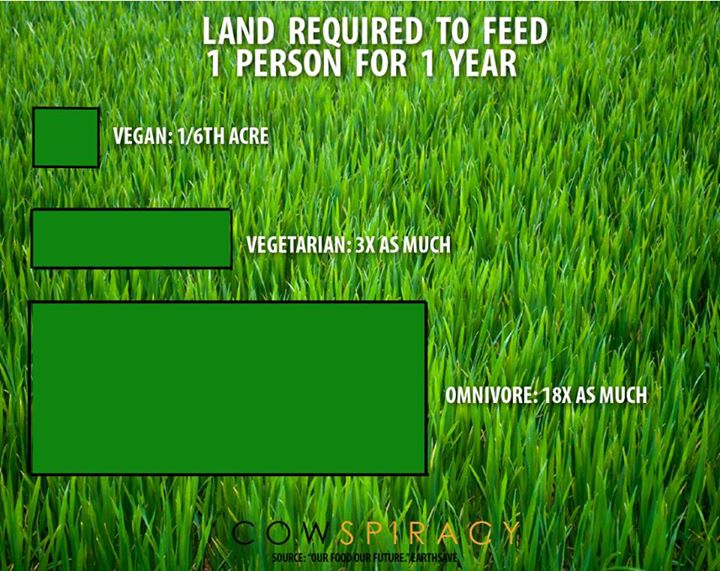
The reality is different. If you eat only plant-based food, you simply just eat the plants which were grown for this purpose. If you eat meat, you eat animals who are fed with plants. The idea of animals running down the meadow and eating the grass is nice .. but naive and not real. Nowadays most of the animals are fed with GMO grains and soy to make the animals grow bigger faster. 80% of world corn and soy production and 1/3 of all the grains is used to feed farm animals. Except the fact that these animals eat the food which could be used to feed starving people all around the world, they also need place to live (→ forest felling) and enormous amount of water - not only for drinking but also for growing the plants for their food and also for meat processing itself. So, in terms of environmental impact, meatless diet is definitely less demanding.
 |
| The survey |
1,282 answers
- Mostly women, 15-30 years old
- 95 % insterested in healthy diet
Diet
- 10,8% people know exactly how much macronutrients (fat, carbohydrates, protein) they should eat
- 35% people don't know that
- 61% people don't know what micronutriens are
- 40,6% people eat sweets several times a week, 14,8% every day, 6% eat no sweets
- 24,3% people can imagine their life without animals products
- 23,6% people couldn't stop eating animal products, because they like their taste
- 23,1% people couldn't stop eating animal products, because they think these products contain nutrients we can't get from plants
- 11,8% people don't know how to replace these products
- 11,8% people couldn't stop eating them because of the habits
- 2,4% people think, that plant-based diet is too expensive
Health*
(x% suffers or used to suffer from ... )- 42,9% acne
- 36,3% overweight / obesity
- 7% high bloog pressure
- 1,2% osteoporosis
- 0,9% cancer
- 0,4% II type diabetes
Meat & Daory
- 50,8% eat meat several times a week
- 24,6% every day, 3,3% several times a day
- 11,2% several times a week
- 11,2% several time a mont
- 10,2% no meat
- 43,7% eat dairy products every day
- 16,4% dairy several times a day
- 8,1% several tiems a month
- 3,4% no dairy
Plant-based diet & animals
- 68,5% saw (video / in real) slaughter of an animal
- 23,1% don't feel bad about it
- 45,4% didn't feel well physically or emotionally when watching that
- 41% couldn't kill an animal, 11,3% could do that
- 35% would kill an animal in crisis situation, 12,7% could only catch a fish
- 52,4% think that cow has milk only when she gives birth to a calf
- 47,6% think that cow produces milk naturally all the time
- 57,8% think that the whole would could be fed with only plants & plant-based diet is less demanding for the environment
- 42,2% think that it's not possible to grow enough plants to feed all the people
- 66,5% would never eat cat/dog meat
- 27,4% would do it in crisis situation
- 6,2% wouldn't eat it at all

No comments:
Post a Comment